
What is Hysteroscopy?
Hysteroscopy is a thin tube equipped with a camera and light, inserted through the vagina to examine the inside of the uterus without surgery. It is used for diagnosis (finding the cause of bleeding or delayed pregnancy) and treatment (removing fibroids and polyps). Procedure duration: 5 minutes to an hour depending on the purpose, with quick recovery within one day.
🔬 Hysteroscopy: Everything You Need to Know
Hysteroscopy is considered one of the most important modern medical techniques that has revolutionized the diagnosis and treatment of uterine problems. It allows the doctor to view the uterine cavity directly without the need for an abdominal incision.
What is Hysteroscopy?
A hysteroscope is a long, thin tube containing a light source and a camera at its end. It is passed through the vaginal opening without any surgical incisions, and transmits an image of the uterus and cervix to a monitor in front of the doctor.
💡 Important Information
Hysteroscopy does not require opening the abdomen - it is inserted directly through the vagina, meaning a shorter recovery period and less pain compared to traditional surgery.
Types of Hysteroscopy
There are two main types of hysteroscopy:
| Criteria | Diagnostic Hysteroscopy | Operative Hysteroscopy |
|---|---|---|
| Goal | Discover the problem | Treat the problem |
| Duration | 5-15 minutes | 30 minutes - 1 hour |
| Anesthesia | Local or none | Usually general |
| Location | Clinic or hospital | Hospital |
| Uses | Confirm imaging results, investigate bleeding | Remove tumors, treat adhesions |
Diagnostic Hysteroscopy
Used to discover the cause of a problem only, such as determining the reason behind abnormal bleeding or delayed pregnancy, or confirming imaging results. It can be performed in the doctor's clinic.
Operative Hysteroscopy
Used to treat a problem after it has been discovered. Precise surgical instruments are inserted through the hysteroscope to remove tumors, polyps, or to treat adhesions.
When Do You Need Hysteroscopy?
A doctor may request a hysteroscopy in the following cases:
- Severe bleeding during or between periods.
- Postmenopausal bleeding.
- Delayed pregnancy or recurrent miscarriages.
- Removing uterine fibroids and polyps.
- Treating uterine adhesions.
- Removing a uterine septum (a congenital defect).
- Displacement of an IUD.
- Taking a biopsy from the uterine lining.
What is the Best Time for a Hysteroscopy?
During the first week after the end of the menstrual period - this timing provides the clearest view of the inside of the uterus.
How is Hysteroscopy Performed? (Step by Step)
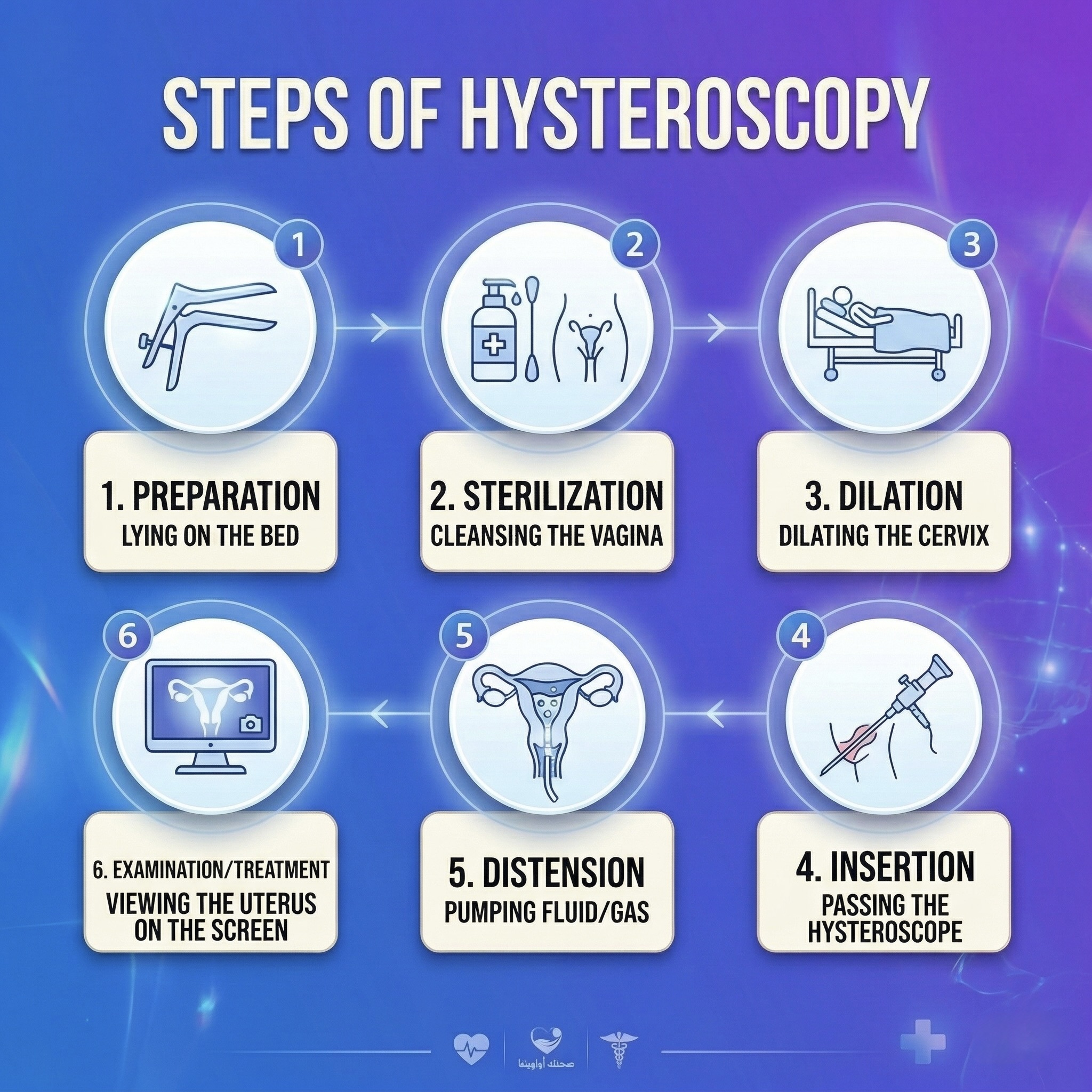
- Preparation: Lying on a specialized bed with legs secured.
- Sterilization: Disinfecting the vagina and cervix.
- Dilation: Dilating the cervix to allow the hysteroscope to enter.
- Insertion: Passing the hysteroscope through the vagina into the uterus.
- Expansion: Pumping liquid or gas to expand the uterus and clear the view.
- Examination/Treatment: Viewing the uterus on the monitor and performing treatment if necessary.
⏱️ How Long Does the Procedure Take?
Diagnostic Hysteroscopy: 5-15 minutes | Operative Hysteroscopy: 30 minutes to an hour or more, depending on the case.
Is Hysteroscopy Painful?
The sensation varies from woman to woman. Some women feel no pain at all, while others may experience mild discomfort.
Options for Pain Relief:
- Taking a painkiller (e.g., Paracetamol) before the procedure.
- Local anesthesia.
- General anesthesia (for operative hysteroscopy).
Benefits of Hysteroscopy
| Feature | Details |
|---|---|
| No abdominal incisions | No surgical cuts - inserted through the vagina. |
| Fast recovery | Return home on the same day. |
| Short stay | No need for overnight hospital stays. |
| Less pain | Reduced need for painkillers post-procedure. |
| Avoiding hysterectomy | Treats the issue while preserving the uterus. |
Risks and Complications
Hysteroscopy is very safe - complications occur in less than 1% of cases.
- Anesthesia risks (rare).
- Infection.
- Bleeding.
- Injury to the cervix or uterus (very rare).
- Allergic reaction to the materials used.
How Do You Prepare for Hysteroscopy?
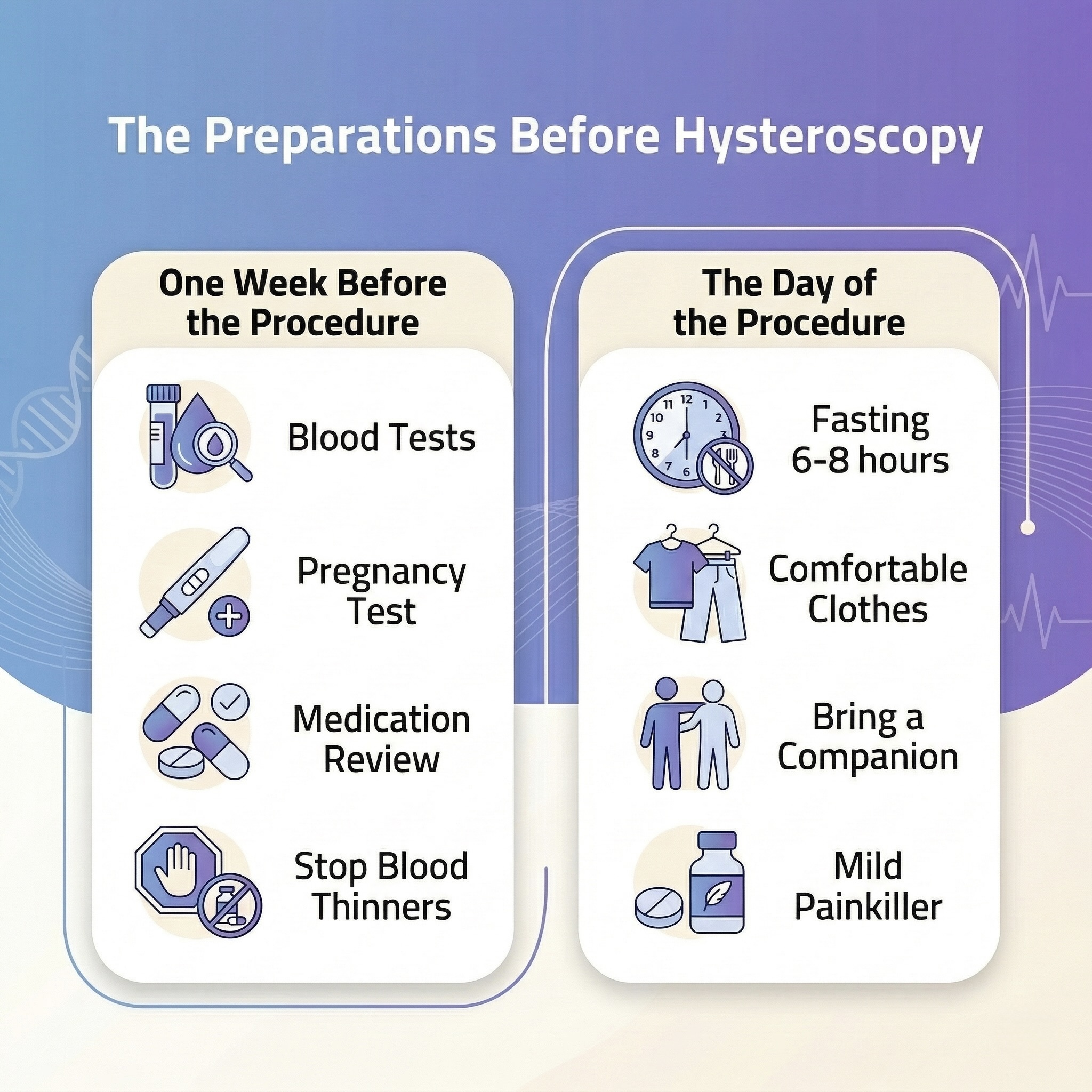
A Week Before:
- Perform required blood tests.
- Take a pregnancy test to confirm you are not pregnant.
- Inform the doctor about any medications you are taking.
- Stop blood thinners as directed by your doctor.
Day of the Procedure:
- Fasting: 6-8 hours prior if under general anesthesia (no fasting needed for local anesthesia).
- Wear comfortable clothing that is easy to remove.
- Bring a companion to help you return home (especially with general anesthesia).
- Take a mild painkiller before the procedure as directed by the doctor.
🎬 Watch: Explanatory Video on Hysteroscopy
What Happens After Hysteroscopy?
Normal Post-Procedure Symptoms:
- Mild cramps similar to menstrual pain (for a day or two).
- Light bleeding or spotting.
- Shoulder pain if gas was used (disappears quickly).
Tips for a Quick Recovery:
- Rest: Take a day or two off after an operative hysteroscopy.
- Painkillers: Paracetamol or Ibuprofen as needed.
- Bathing: Showers are preferred over baths (soaking) for a week.
- Avoid Sexual Intercourse: For at least a week or until bleeding stops.
- Avoid Tampons: Use sanitary pads only.
⚠️ When Should You Consult a Doctor Immediately?
In case of: fever, severe abdominal pain, heavy bleeding, or foul-smelling vaginal discharge.
📞 Have an Inquiry About Hysteroscopy?
Contact Dr. Mohamed El-Senity's clinic for a consultation.
Cost of Hysteroscopy
The cost varies based on several factors:
| Factor | Impact on Cost |
|---|---|
| Type of Procedure | Diagnostic is generally less expensive than operative. |
| Type of Anesthesia | General anesthesia costs more than local. |
| Hospital | Varies depending on the facility's level and services. |
| Additional Procedures | Removing tumors or adhesions increases the overall cost. |
💡 To Get the Exact Cost
Consult your doctor to determine the required type of hysteroscopy and the expected cost tailored to your specific condition.
Do You Need a Hysteroscopy?
Book your consultation now with Prof. Dr. Mohamed El-Senity - Expert in Gynecological Endoscopy.

Prof. Dr. Mohamed Abdel Fattah El-Senity
Consultant Obstetrics and Gynecology
Expert in Hysteroscopy and Laparoscopy
Ain Shams University Hospitals
+20 Years of ExperienceFrequently Asked Questions About Hysteroscopy
📚 Related Articles on Endoscopy
🔴 Uterine Fibroids:
🔵 Hysterectomy:
🟢 Endoscopy & Laparoscopy:
🟡 Endometriosis:
🟣 Fertility and Pregnancy:
📚 Scientific Sources
- ACOG - Hysteroscopy Guidelines 2024
- Mayo Clinic - Hysteroscopy Procedure
- NHS - Hysteroscopy Information
⚕️ Medical Disclaimer
This content is for health education purposes only and does not substitute for consulting a specialist doctor. Every case is different.