
🔬 Laparoscopy: Your Comprehensive Guide to Diagnosis and Treatment Without Surgery
What is Laparoscopy?
Laparoscopy is a thin tube equipped with a camera and lighting, inserted through a small opening in the navel to examine the pelvic organs without surgically opening the abdomen. It is used for diagnosis (finding the cause of pain or delayed pregnancy) and treatment (removing cysts, treating endometriosis, performing a hysterectomy). Procedure duration: 30 minutes to 2 hours, and recovery is much faster than open surgery.
🔬 Laparoscopy: Everything You Need to Know About Diagnosis and Treatment
Laparoscopy is considered one of the most important revolutions in modern gynecological surgery. It allows the doctor to view the pelvic organs directly and perform surgeries without the need to fully open the abdomen.
What is Laparoscopy?
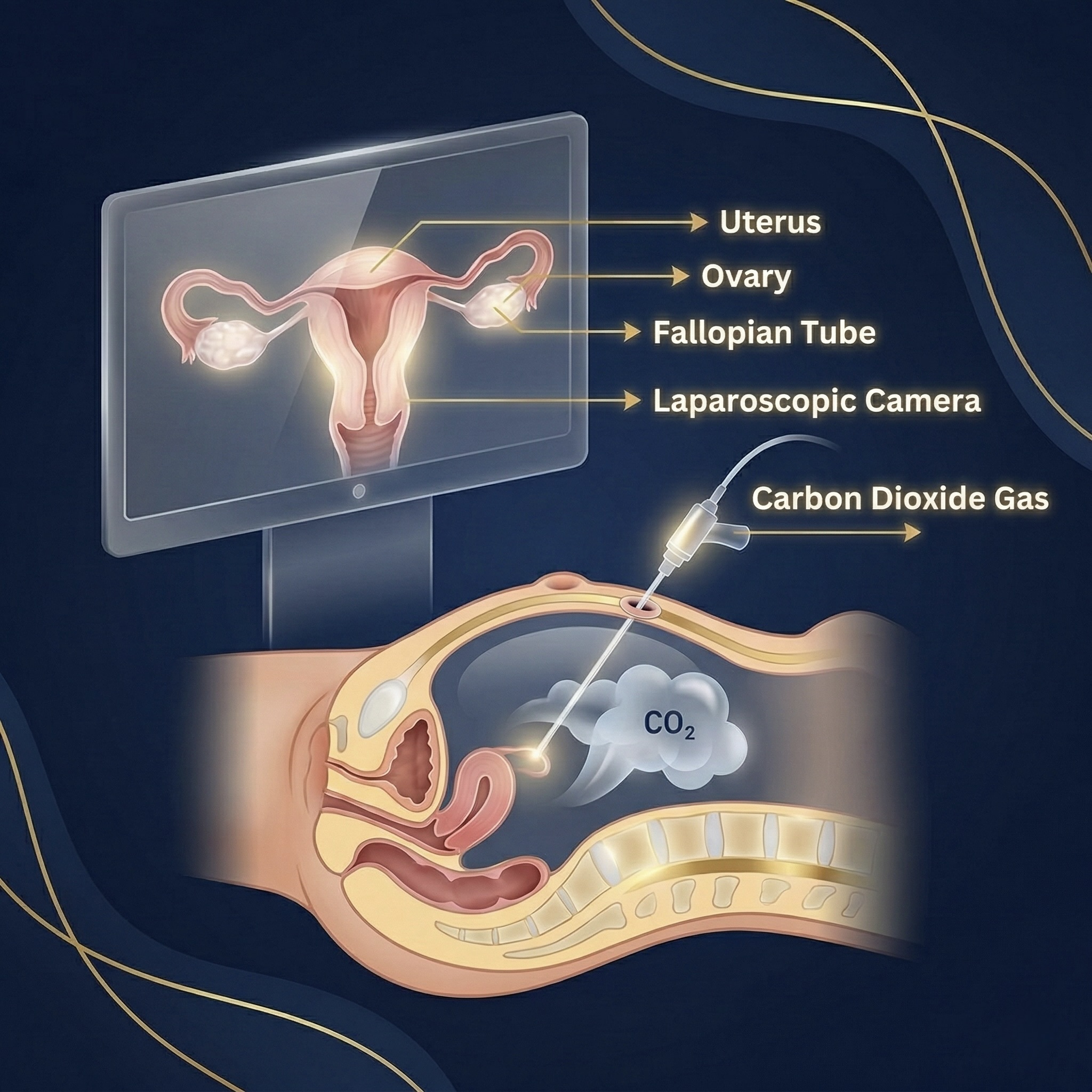
Definition: Laparoscopy involves a thin, long tube equipped with a camera and a light source, inserted through a small opening in the navel. The camera transmits a live image of the internal pelvic organs to a screen in front of the doctor, enabling them to:
- View the uterus from the outside.
- Examine the ovaries and fallopian tubes.
- Discover adhesions and tumors.
- Perform surgeries without a large incision.
💡 Difference Between Laparoscopy and Hysteroscopy
Laparoscopy: Enters through the navel and views outside the uterus and ovaries. Hysteroscopy: Enters through the vagina and views inside the uterine cavity.
Uses of Laparoscopy
Laparoscopy is used for both diagnosis and treatment:
| Diagnostic Uses | Therapeutic Uses |
|---|---|
| Determine the cause of chronic pelvic pain | Remove uterine fibroids |
| Check for blocked fallopian tubes | Remove ovarian cysts |
| Diagnose endometriosis | Treat endometriosis |
| Confirm Polycystic Ovary Syndrome (PCOS) | Laparoscopic hysterectomy |
| Find the cause of delayed pregnancy | Treat ectopic pregnancy |
| Examine for adhesions | Remove adhesions |
| Take tissue biopsies | Tubal ligation (contraception) |
Laparoscopy vs. Open Surgery
When does a doctor opt for laparoscopy instead of open surgery?
| Criteria | Laparoscopy | Open Surgery |
|---|---|---|
| Incision Size | 0.5-1 cm (small openings) | 10-15 cm (large incision) |
| Bleeding | Much less | More |
| Post-op Pain | Mild | Severe |
| Hospital Stay | One day or less | 3-7 days |
| Recovery | 3-7 days | 4-6 weeks |
| Return to Work | Within a week | 4-6 weeks |
| Adhesions | Lower chances | Higher chances |
| Cosmetic Appearance | Nearly invisible scars | Noticeable scar |
🌟 Why is Laparoscopy Preferred?
Laparoscopy reduces bleeding, pain, and recovery time, while offering a better cosmetic outcome with a lower chance of developing internal adhesions.
How is Laparoscopy Performed? (Step by Step)
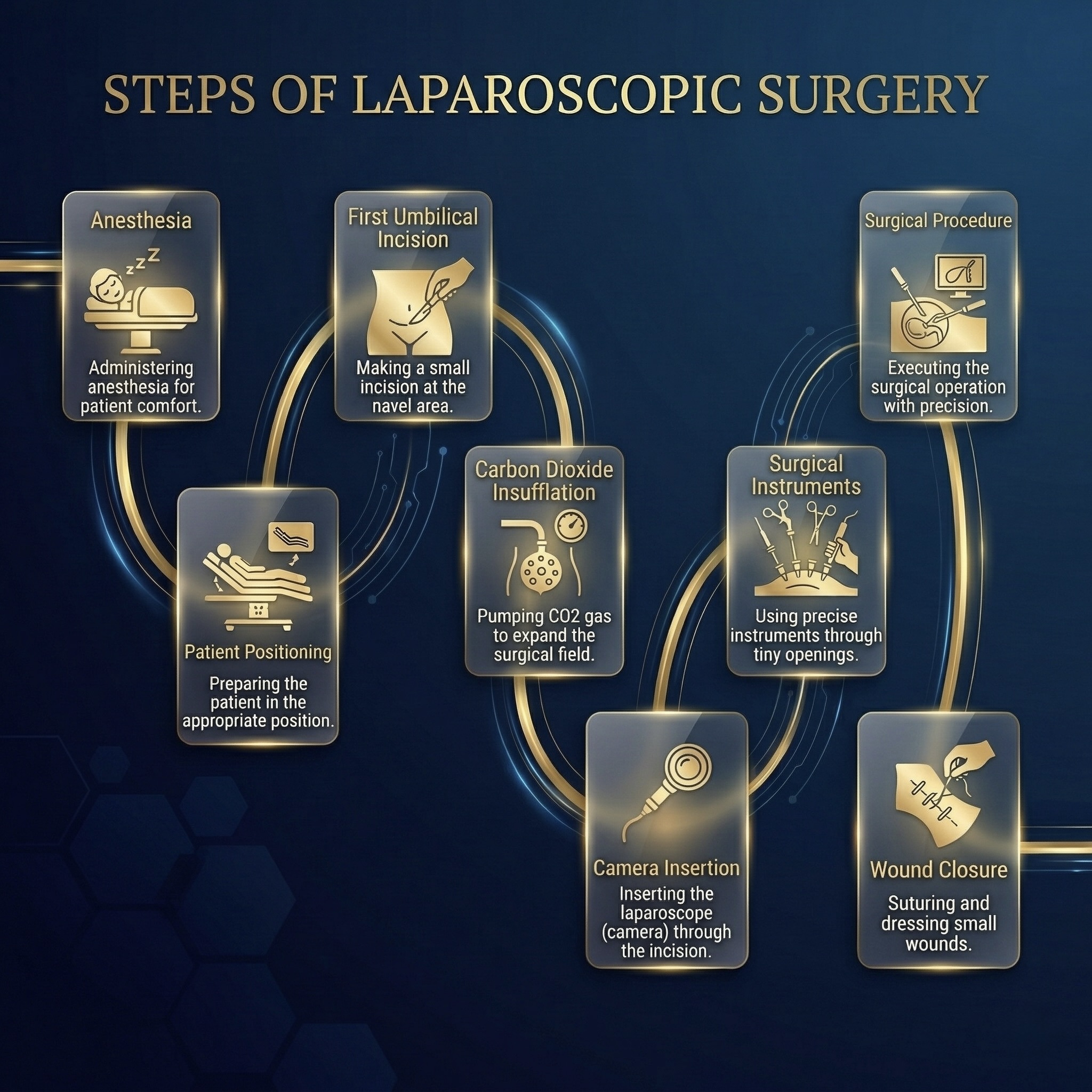
- Anesthesia: General anesthesia to relax muscles and prevent pain.
- Positioning: Lying down with a slight tilt (head lower than feet).
- First Incision: A small cut in the navel (0.5-1 cm).
- Abdominal Inflation: Injecting carbon dioxide gas to expand the abdomen.
- Inserting the Laparoscope: The camera transmits the image to the screen.
- Additional Incisions: 1-3 extra small holes to insert surgical tools.
- Examination/Treatment: Viewing the organs and performing the surgery.
- Closure: Releasing the gas and stitching the small incisions.
⏱️ How Long Does the Procedure Take?
Diagnostic: 30-45 minutes | Therapeutic: 1-2 hours depending on the type of surgery.
Preparation for Laparoscopy
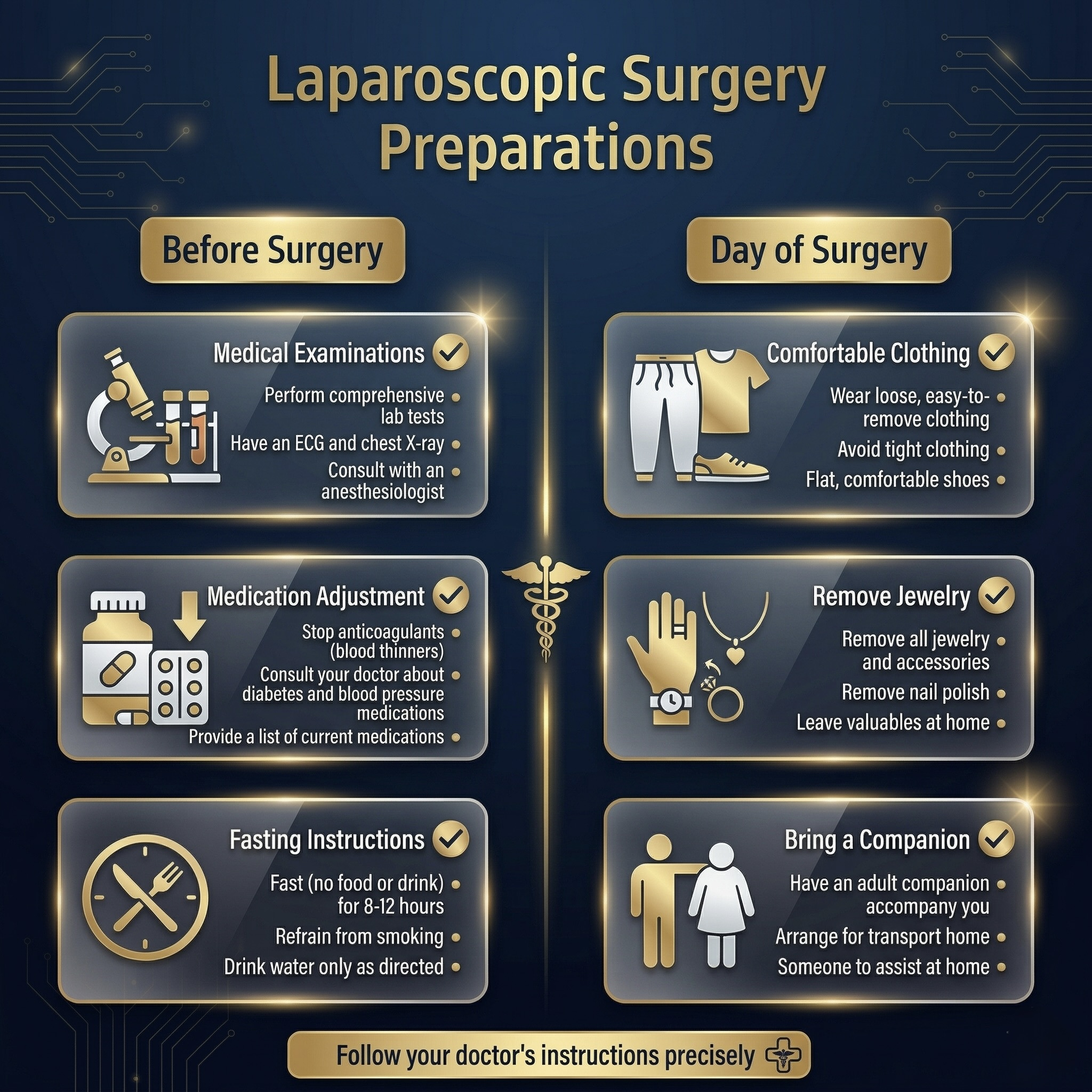
Before the Surgery:
- Perform the required tests and investigations.
- Inform the doctor about all medications you are taking.
- Stop taking blood thinners according to the doctor's instructions.
- Fasting: Stop eating and drinking from midnight before the surgery.
Day of the Surgery:
- Wear flat shoes (you might feel unsteady after anesthesia).
- Do not wear jewelry.
- Wear loose-fitting clothes.
- Remove nail polish.
- Bring a companion to drive you home after the procedure.
Benefits of Laparoscopy
| Benefit | Details |
|---|---|
| Small incisions | Only 0.5-1 cm compared to 10-15 cm in open surgery. |
| Less bleeding | Reduces the likelihood of needing a blood transfusion. |
| Less pain | Reduced need for painkillers post-surgery. |
| Fast recovery | Return to work within 3-7 days. |
| Short stay | Often go home the same day or stay just one night. |
| Fewer adhesions | Lower chances of forming internal adhesions. |
| Cosmetic appearance | Scars are nearly invisible. |
Risks and Complications
Is laparoscopy safe? Yes, laparoscopy is very safe. Complications are rare, occurring in fewer than 3 out of 1000 cases.
Potential Complications (Rare):
- Injury to an organ (very rare).
- Bleeding.
- Infection.
- Anesthesia complications.
- Deep vein thrombosis (rare).
⚠️ Risk Factors:
Obesity, advanced age, previous abdominal surgeries, and chronic diseases. The doctor will discuss the specific risks related to your condition.
📞 Do you need a consultation for a laparoscopy?
If you are a candidate for laparoscopy, a direct medical evaluation helps in determining the most appropriate treatment plan for your condition.
Recovery After Laparoscopy
In the Hospital:
- Stay in the recovery room for about an hour.
- Usually, you can leave on the same day (after 4 hours).
- In some cases, you may need to stay for one night.
Normal Symptoms Post-Surgery:
- Abdominal swelling for several days.
- Shoulder pain due to the gas used (disappears within 72 hours).
- Mild sore throat (from the breathing tube).
- Slight nausea on the day of surgery.
- Light vaginal bleeding that may last for a month.
Tips for a Fast Recovery:
- Rest: Take it easy for the first two days.
- Walking: Start moving around to prevent blood clots.
- Take painkillers as needed.
- Bathing: You can shower at any time.
- Bandage removal: After 2-3 days.
- No driving: For 24 hours after general anesthesia.
- Sexual intercourse: Wait a week after the surgery.
- Return to work: Within 3 days (diagnostic) or 1-2 weeks (therapeutic).
⚠️ When should you consult a doctor immediately?
- Nausea or vomiting lasting more than 24 hours.
- High fever.
- Redness, swelling, or pus around the incision.
- Heavy or clotted bleeding.
- Severe pain that does not respond to painkillers.
Cost of Laparoscopy
Definition: The cost varies depending on several factors:
| Factor | Impact on Cost |
|---|---|
| Type of Surgery | Diagnostic is generally less expensive than therapeutic. |
| Type of Procedure | Removing a simple cyst costs less than a hysterectomy. |
| Hospital | Varies depending on the hospital's facilities and tier. |
| Length of Stay | Going home the same day is cheaper than an overnight stay. |
| Surgeon's Experience | High levels of expertise may affect the overall cost. |
💡 To get the exact cost
The specialist doctor will determine the required procedure after an examination, and based on that, the expected cost can be identified.
Frequently Asked Questions About Laparoscopy
Do you need a diagnostic or therapeutic laparoscopy?
Book your consultation with Prof. Dr. Mohamed El-Senity - Expert in Gynecological Endoscopic Surgeries

Prof. Dr. Mohamed Abdel Fattah El-Senity
Consultant Obstetrics and Gynecology
Expert in Gynecological Endoscopic Surgeries
Ain Shams University Hospitals
European Fellowship in Laparoscopic Surgery
+20 Years Experience | First Robotic Surgery in the Middle East📚 Related Articles on Laparoscopy
🔴 Uterine Fibroids:
🔵 Hysterectomy:
🟡 Endometriosis:
🟣 Fertility and Pregnancy:
📚 Scientific Sources
- ACOG - Laparoscopy Guidelines 2024
- Mayo Clinic - Laparoscopy Procedure
- NHS - Laparoscopy Information
- AAGL - Minimally Invasive Gynecology
⚕️ Medical Disclaimer
This content is for health education purposes only and does not substitute for consulting a specialist doctor. Every case is different.