

Dr. Mohamed Abdel Fattah El-Senity
Expert in Gynecological Endoscopic SurgeriesCesarean Section: The Comprehensive Guide 2026
Everything you need to know about a Cesarean section: Causes, symptoms, complications, and recovery tips.
What is a Cesarean Section?
Direct Answer: A Cesarean section (C-section) is a surgical procedure in which the baby is delivered through an incision in the lower abdomen and uterus instead of a natural vaginal birth. Its global rate is 35%, but in Egypt, it reaches 65% (the highest globally).
Global C-Section Rate
C-Section Rate in Egypt
Elective upon personal request
📌 Key Points
- Definition: A surgical procedure to deliver the baby through an incision in the abdomen and uterus.
- Rate in Egypt: 65% (highest globally).
- Main Causes: Fetal position, size, or maternal medical conditions.
- Recovery: 6-8 weeks for a complete recovery.
- Follow-up: Crucial to prevent wound infections.
Table of Contents
- Causes of a Cesarean Section
- Labor Symptoms
- C-Section Wound
- Wound Infection
- Complications of a C-Section
- Postpartum Tips
- When to Consult a Doctor?
- Comparison: C-Section vs. Natural Birth
- Recovery Timeline
- Preparation Before Surgery
- Psychological Impact
- Frequently Asked Questions
- Why Dr. Mohamed Abdel Fattah?
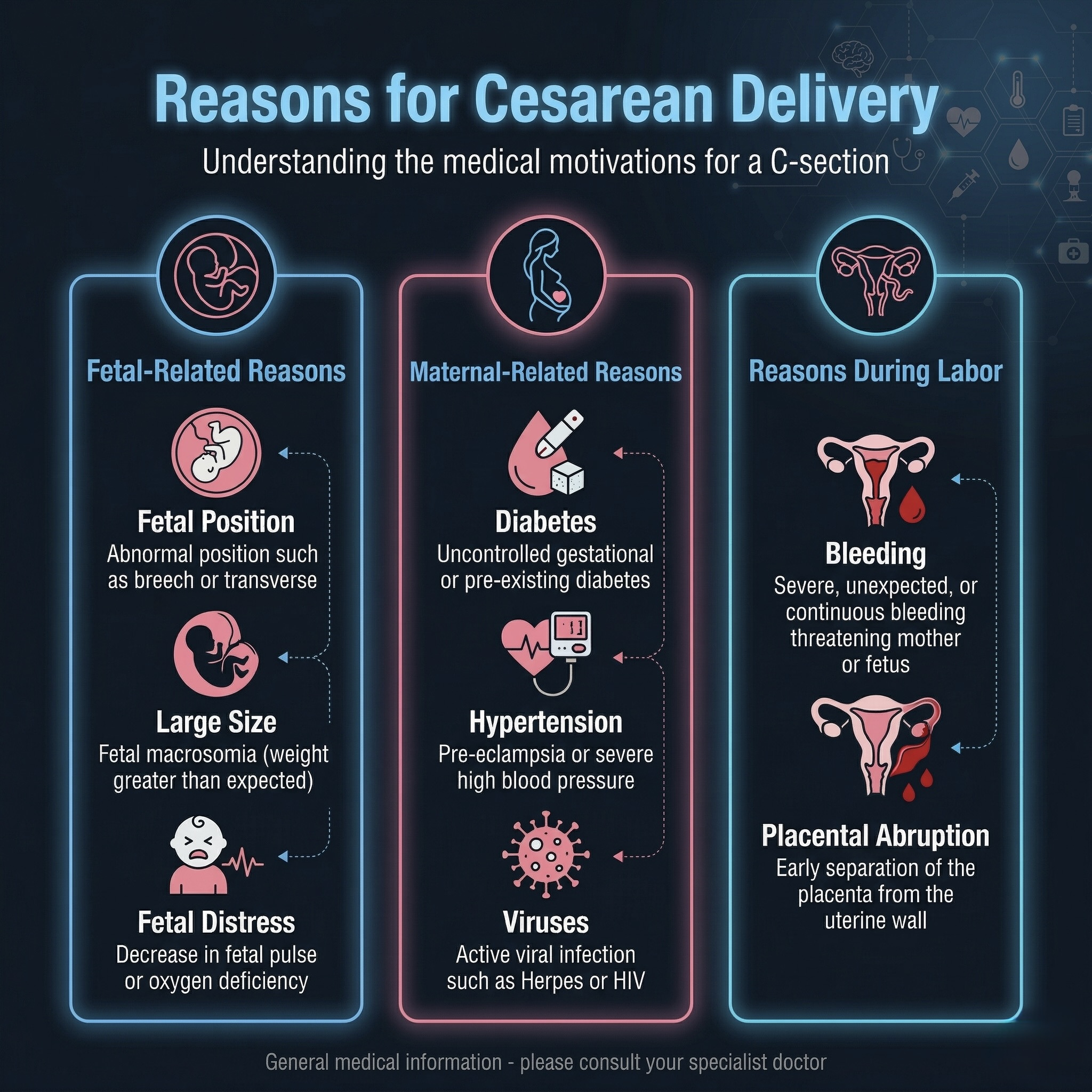
Causes of a Cesarean Section
Direct Answer: A C-section is resorted to when there is danger to the mother or the fetus from a natural birth, such as: a breech baby, large fetal size, or maternal medical conditions.
Fetal-related Causes:
- Hydrocephalus: Excess fluid in the baby's brain.
- Breech Position: The baby's head is facing up and feet are down.
- Large Fetal Size (Macrosomia): Difficult to pass through the vagina.
- Fetal Distress: Insufficient oxygen reaching the baby.
- Low Heart Rate: A drop in the fetal heart rate.
- Umbilical Cord Defects: Problems with the umbilical cord or placenta.
Maternal-related Causes:
- Contagious Viruses: Herpes or HIV.
- Unstable Diabetes: Or high blood pressure.
- Large Uterine Fibroid: Obstructing the baby's exit - Read about fibroid treatment.
- Severe Lung Diseases: Or heart problems.
- Preeclampsia.
- Kidney Dysfunction.
- Previous Cesarean Section.
Causes During Labor:
- Failure to Dilate: Cervix doesn't open enough for the baby to pass.
- Placental Abruption: Separation during natural labor.
- Severe Uterine Bleeding.
- Twin Pregnancy: Or multiples.
Labor Symptoms (Signs of Labor)
Direct Answer: The most important signs of approaching labor are: The baby dropping, cervical dilation, cramps, water breaking (amniotic fluid), and labor pains.
2-4 weeks before birth
Stretching and thinning begins
Stretching of muscles and joints
Relaxation of body muscles
Thick brown or bloody mucus
Amniotic fluid leaking
💡 Important Information
Do not panic when your water breaks! You still have time (a few hours) before active labor begins, especially if it is your first birth.
C-Section Wound
Direct Answer: The C-section wound is a major concern for mothers. Normal symptoms: mild pain and slight swelling. Warning signs: bleeding, yellow discharge, foul odor.
Symptoms of the Wound Opening Internally:
- Blood spotting.
- Yellow discharge.
- Foul odor near the wound site.
- Bright red, un-clotted blood flowing.
⚠️ In Case of Bleeding
Place a piece of sterile medical gauze over the wound and head to the hospital immediately to re-suture if necessary.
C-Section Wound Infection
Direct Answer: Signs of a C-section wound infection: Severe redness, swelling, pus, fever, and increasing pain. You must quickly consult a doctor for antibiotic treatment.
Symptoms of Infection:
- Clear Redness: Around the suture site.
- Swelling: In the area around the wound.
- Pus: Appearance of a white or yellow substance.
- Pain during Urination.
- High Body Temperature: Systemic and localized.
- Severe Pain: More than usual.
- Bloody Bleeding: Liquid or clotted.
Who is Most at Risk for Infection?
Types of Infections:
| Type | Description | Treatment |
|---|---|---|
| Cellulitis | Bacteria causing redness and itching. | Antibiotics |
| Abscess | Swelling and pus accumulation. | Antibiotics/Drainage |
| Thrush (Yeast) | White and red fungal patches. | Antifungals |
| Urinary Tract Infection | Due to the urinary catheter. | Antibiotics |
Complications of a Cesarean Section
Direct Answer: By choosing an experienced doctor, complications are greatly reduced. The main ones are: Endometritis, blood loss, anesthesia issues, and breastfeeding difficulties.
- Endometritis: Inflammation of the uterine lining causing fever, foul discharge, and pelvic pain.
- Blood Loss: More than a natural birth.
- Anesthesia Issues: Potential side effects.
- Wound Infection: Or general infection.
- Injury to Nearby Organs: The bladder or bowels (rare).
- Difficulty Breastfeeding: Due to wound pain.
Postpartum C-Section Tips
Direct Answer: The most important tips are: Complete rest, changing the wound dressing daily, drinking plenty of water, and eating fiber-rich foods. Avoid lifting heavy objects for a month.
Avoid prolonged standing/sitting for a month
Only after doctor's permission
7-8 hours daily
Change dressing daily, keep it dry
Daily with warm water and natural soap
Fiber, vegetables, fruits
💡 Additional Tips
- Drink plenty of water to prevent constipation and urinary tract infections.
- Place a pillow over your wound while sneezing, coughing, or laughing.
- Do not lift heavy objects.
- Monitor your wound daily.
When Should You Consult a Doctor Immediately?
🚨 Signs Requiring an Immediate Call:
- High Body Temperature (Fever).
- Unbearable, Severe Pain.
- Increased Vaginal Bleeding.
- Increasing Redness Around the Wound.
- Swelling in the Surgical Incision.
- Breast Pain accompanied by Fever.
- Foul-smelling Vaginal Discharge.
- Pain While Urinating.
📞 Call Immediately: 01200520520
Do you need a consultation regarding a Cesarean section?
Dr. Mohamed Abdel Fattah El-Senity - Over 20 years of experience in Obstetrics and Gynecology Surgeries.
Comparison: C-Section vs. Natural Birth
Direct Answer: The main difference: C-section takes 45-60 minutes with a 6-8 week recovery, while a Natural birth takes 6-12 hours with a 2-4 week recovery.
| Criteria | Cesarean Section | Natural Birth |
|---|---|---|
| Duration | 45-60 minutes | 6-12 hours (first time) |
| Anesthesia | Spinal or General | None or Epidural |
| Hospital Stay | 3-4 days | 1-2 days |
| Full Recovery | 6-8 weeks | 2-4 weeks |
| Postpartum Pain | Wound pain (weeks) | Mild pain (days) |
| Breastfeeding | May be delayed due to pain | Starts immediately |
| Next Pregnancy | Advised to wait 1 year | As desired |
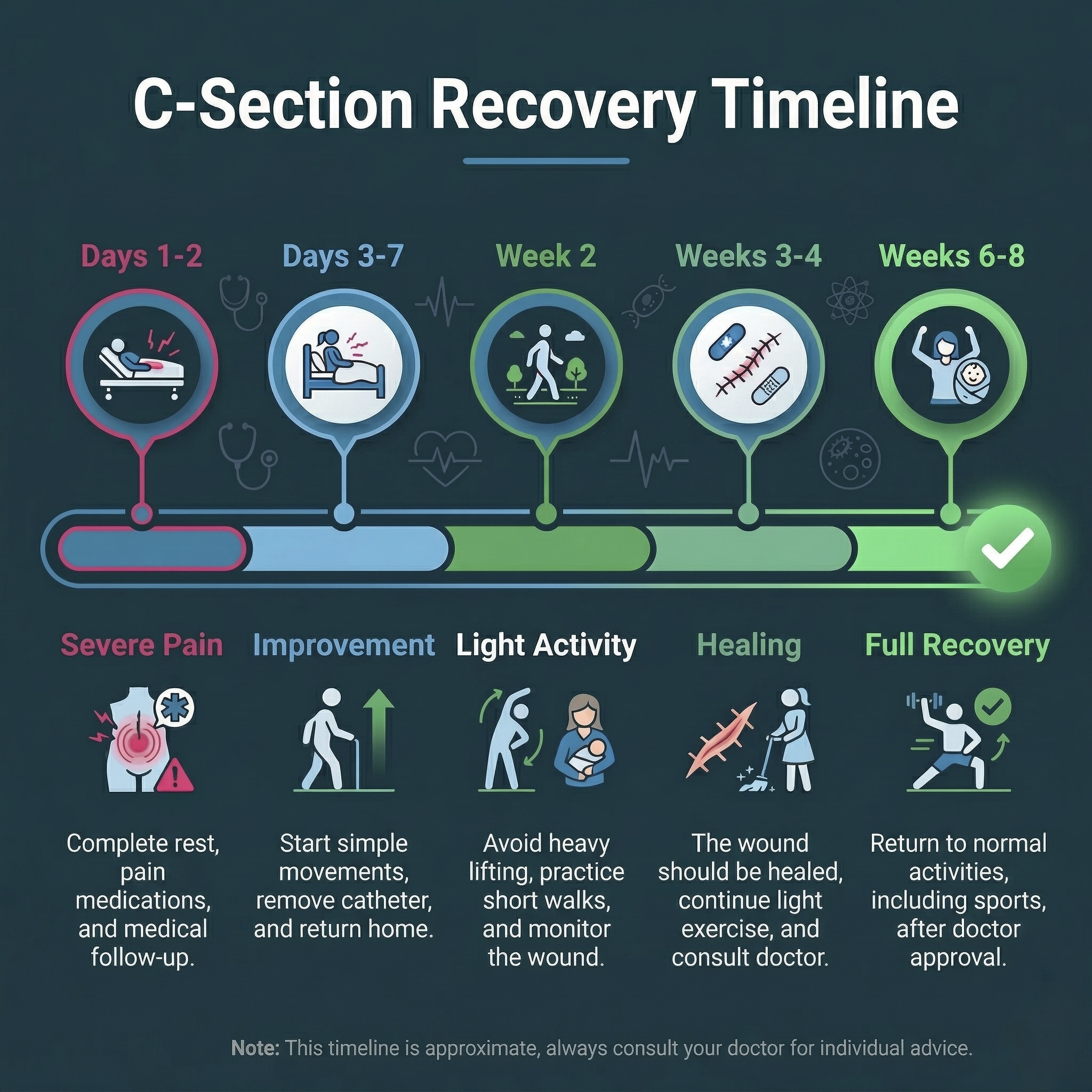
Recovery Timeline
Direct Answer: Full recovery takes 6-8 weeks. The first week is the hardest, then the condition improves gradually.
| Period | What Happens | What You Can Do |
|---|---|---|
| Days 1-2 | Severe pain, difficulty moving | Light walking, breastfeeding in a comfortable position |
| Days 3-7 | Gradual improvement, stitches removal | More walking, change wound dressing daily |
| Week 2 | Less pain, more activity | Very light household chores |
| Weeks 3-4 | Outer wound healing | Driving (after doctor's approval) |
| Weeks 6-8 | Full recovery | Return to normal activity and sports |
Preparation Before a Cesarean Section
Direct Answer: Before the surgery: Blood tests, pack the hospital bag, fast for 6-8 hours. The surgery itself takes 45-60 minutes.
A Week Before the Surgery:
- Comprehensive blood tests.
- Prepare the hospital bag (clothes, baby essentials).
- Arrange who will help you after delivery.
- Discuss the type of anesthesia with the doctor.
The Night Before:
- Fasting: 6-8 hours before the surgery.
- Shower thoroughly.
- Remove nail polish and jewelry.
- Sleep early to rest well.
💡 What Happens During the Surgery?
- Anesthesia (usually spinal).
- Sterilizing the abdomen.
- Horizontal incision in the lower abdomen (10-15 cm).
- Uterine incision and delivery of the baby (5 minutes).
- Removal of the placenta and suturing of the uterus.
- Closing the abdominal wound (30-45 minutes).
Psychological Impact After a C-Section
⚠️ Postpartum Depression
You may feel sad or frustrated after giving birth. This is normal in the first few days, but if it lasts for more than two weeks, consult your doctor.
Tips for Psychological Support:
- Ask for help from family and friends.
- Do not pressure yourself.
- Talk about your feelings with your husband.
- Get plenty of rest.
- Go outside for a walk when you are able to.
Frequently Asked Questions
How long does a C-section surgery take?
The surgery takes from 45 minutes to a full hour. Delivering the baby only takes 5-10 minutes, and the rest is for removing the placenta and closing the wound.
Is a Cesarean section painful?
During the surgery, you will not feel pain due to the anesthesia. Afterward, there will be pain in the wound area for about a week, which is managed with painkillers.
When can I walk after a C-section?
It is recommended to do some light walking 24 hours after the surgery. Walking helps prevent blood clots and speeds up recovery.
How many C-sections can I have?
Usually, it is advised not to exceed 3-4 Cesarean sections. Every subsequent surgery increases the risk of complications in future ones.
Can I have a natural birth after a previous C-section?
Yes, it is possible in some cases (VBAC), but it requires the doctor's evaluation of the uterus's condition and the previous scar. Learn more about this here.
When can I get pregnant again after a C-section?
It is recommended to wait at least 12-18 months to give the wound enough time to heal completely.
Why Dr. Mohamed Abdel Fattah El-Senity?
- +20 years of experience in Obstetrics and Gynecology Surgeries.
- MD with Honors.
- European Fellowship in Endoscopic Surgeries.
- Consultant at Ain Shams University.
- Thousands of successful surgeries.
Read more about my experience with laparoscopy to learn about the doctor's expertise.
Related Articles
Duration of Hysterectomy
Learn about the expected duration of the surgery
My Experience with Laparoscopy
Real experiences with laparoscopic surgery
Treatment of Uterine Fibroids
Everything you need to know about fibroids
Uterine Fibroids and Pregnancy
Do fibroids affect reproduction?
Treatment of PCOS
5 facts you need to know about the treatment
Endometriosis
Cost of the surgery in Egypt 2025