

Dr. Mohamed Abdel Fattah El-Senity
Expert in Gynecological Endoscopic SurgeriesAdenomyosis: Causes, Symptoms, and Latest Treatment Methods 2026
A comprehensive medical guide answering all your questions about Adenomyosis, from diagnosis to treatment.
⚠️ Consult Your Doctor
This information is for educational purposes only. If you are experiencing severe symptoms, consult your specialist doctor.
What is Adenomyosis?
Direct Answer: Adenomyosis is a condition where endometrial tissue grows into the muscular wall of the uterus instead of staying in the uterine cavity. It causes an enlarged uterus, heavy bleeding, and severe pain, especially during the menstrual cycle. Symptoms often disappear after menopause.
📌 Key Points
- Definition: Growth of endometrial tissue into the muscular wall.
- Main Symptoms: Heavy bleeding, severe pain, enlarged uterus.
- Most Affected Group: Women between 40-50 years old.
- Treatment: Ranging from medications to hysterectomy depending on the case.
- Effect on Pregnancy: May affect fertility, but pregnancy is possible.
- Natural Healing: Symptoms usually disappear after menopause.
Table of Contents
What is Adenomyosis?
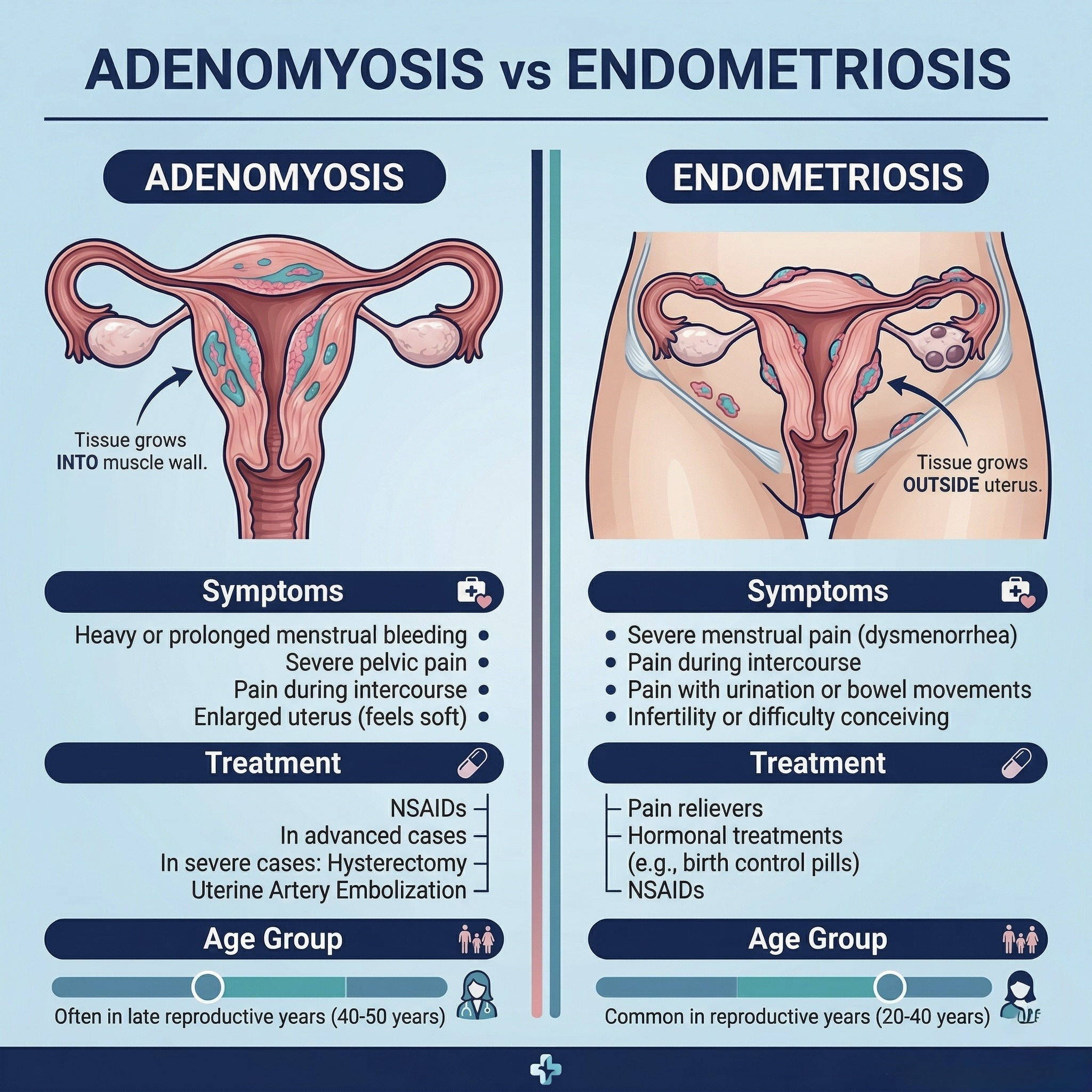
Direct Answer: Adenomyosis is a negative effect related to endometriosis, where endometrial tissue creeps from its original position into the area between the uterus and its surrounding muscles.
This condition causes the uterine walls to grow thicker and denser, resulting in:
- Heavy bleeding, especially during the menstrual cycle.
- Severe pain during the cycle.
- Pain during marital relations.
- A noticeable enlargement in the size of the uterus.
💡 Important Information
The symptoms of adenomyosis often disappear about one year after the last menstrual cycle (menopause), due to the decrease in estrogen, which is the hormone driving the disease.
Causes of Adenomyosis
Direct Answer: The exact cause is scientifically unknown, but research suggests several theories: genetic factors, retrograde menstrual bleeding, or an increase in certain hormones (estrogen, progesterone, prolactin).
Proposed Scientific Theories:
| Theory | Explanation |
|---|---|
| Congenital Extra Tissues | Tissues present before birth that begin to grow during adulthood. |
| Invasive Growth | Abnormal tissues pushing themselves from the lining into the uterine muscle. |
| Cesarean Section Scar | An incision in the uterus during surgery allowing tissue to migrate. |
| Stem Cell Abnormality | A defect in the stem cells present in the muscular wall of the uterus. |
| Postpartum Inflammation | Inflammation of the uterus that may occur after natural childbirth. |
Risk Factors
Direct Answer: The most susceptible groups are: Women between 40-50 years old, those who have given birth previously, or those who have undergone a C-section or fibroid removal surgery.
40-50 years
Has given birth before
C-section or fibroid removal
Symptoms of Adenomyosis
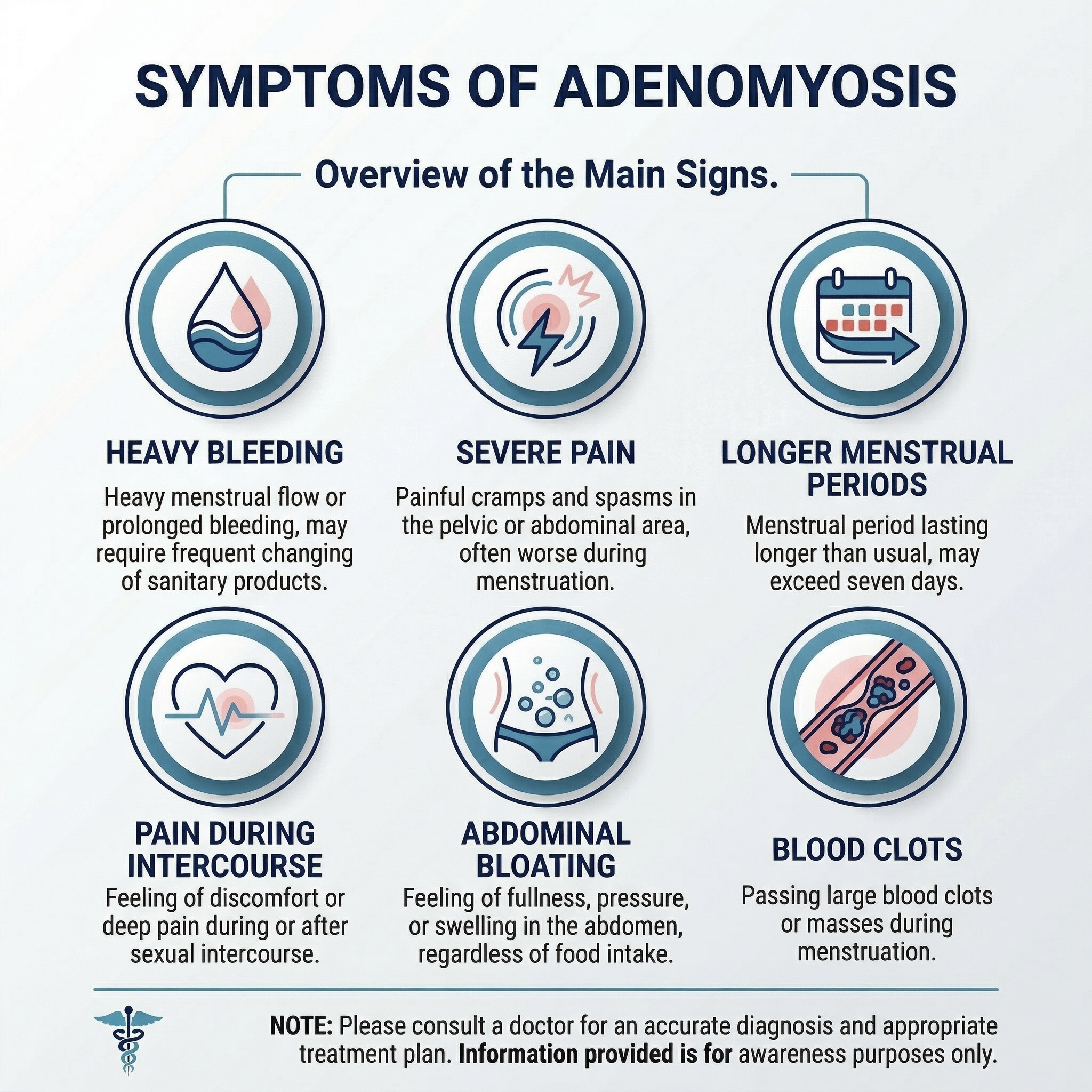
Direct Answer: Main symptoms: Heavy bleeding with the cycle, sharp pain during the cycle and intercourse, abdominal bloating, and blood clots. Symptoms may range from mild to severe.
Accompanying the menstrual cycle
During the menstrual cycle
More than usual
During intimacy
With pelvic pressure
Clots during bleeding
⚠️ Notice
Some women with adenomyosis may not show any symptoms. Therefore, regular check-ups are important for early detection.
Diagnosis of Adenomyosis
Direct Answer: Diagnosis begins with a physical examination to check for uterine enlargement (it may double in size), followed by an ultrasound to rule out tumors, and finally an MRI for final confirmation.
Diagnostic Steps:
- Physical Examination: To confirm the presence of swelling in the uterus (it may double in size or more).
- Ultrasound: To assess the condition and rule out the presence of tumors.
- MRI (Magnetic Resonance Imaging): For final confirmation if the doctor cannot determine the cause with 100% certainty.
Treatment of Adenomyosis
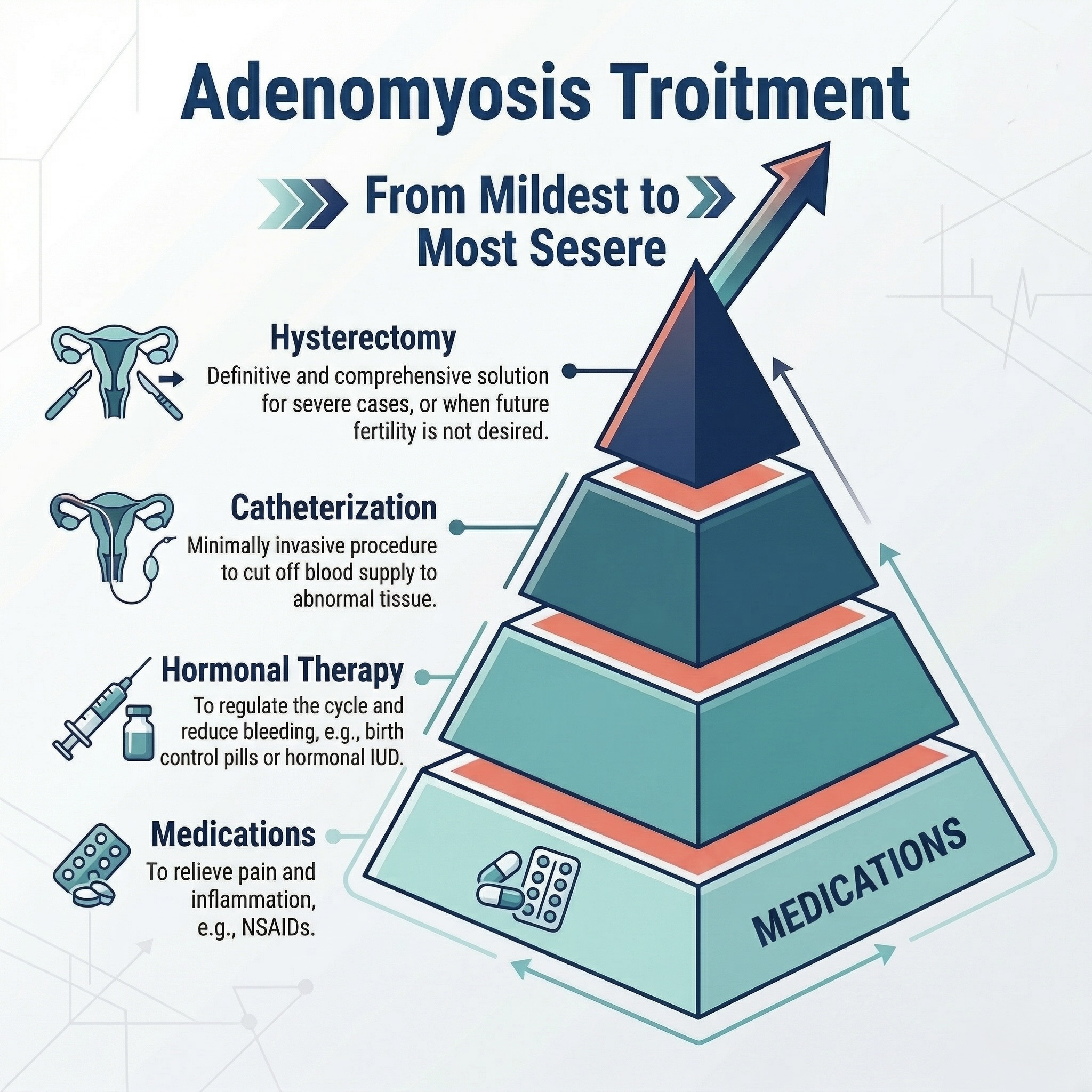
Direct Answer: Treatment ranges from medications (anti-inflammatories, hormones) to interventional procedures (artery embolization, thermal ultrasound), down to a hysterectomy as a last resort.
💡 Mild Cases
The doctor may not prescribe any treatment, especially since the disease may disappear spontaneously after menopause.
1. Medical Treatments:
| Treatment | Mechanism | Notes |
|---|---|---|
| Anti-inflammatories (Ibuprofen) | Reduce bleeding and relieve cramps. | Taken two days before the cycle - Not suitable for pregnant women. |
| Hormonal Therapy | Control symptoms. | Birth control pills containing progestin. |
2. Interventional Procedures:
| Procedure | Description |
|---|---|
| Endometrial Ablation | Surgically removing the lining of the uterine cavity. |
| Uterine Artery Embolization | Blocking certain arteries from supplying blood to the affected area. |
| Ultrasound Surgery | Using thermal waves to destroy the targeted tissues. |
3. Radical Solution:
Hysterectomy
This is the last method the doctor resorts to, especially for women who do not wish to get pregnant. It is considered the only definitive cure for adenomyosis.
Adenomyosis and Pregnancy
Direct Answer: Studies indicate a potential link between adenomyosis and reduced fertility, but it is not definitively proven. Pregnancy is possible with appropriate treatment and follow-up.
📊 Important Information About Fertility
- Adenomyosis may affect the embryo's ability to implant.
- Some affected women conceive and deliver normally.
- Follow-up with a specialized doctor increases the chances of a successful pregnancy.
- Some treatments are used to improve the chances of pregnancy.
Potential Complications:
⚠️ Anemia
One of the most important complications due to the bleeding associated with the disease. Anemia reduces red blood cells, which causes:
- Fatigue and exhaustion.
- Dizziness.
- Depressive mood.
Tips for Living and Pain Relief
Direct Answer: You can relieve adenomyosis symptoms at home through warm compresses, light exercise, and diet modification, alongside medical treatment.
🔥 Pain Relief:
- Warm compresses: Place on the lower abdomen to relieve cramps.
- Warm bath: Helps to relax pelvic muscles.
- Over-the-counter painkillers: Ibuprofen or Naproxen (consult your doctor first).
🏃♀️ Lifestyle:
- Light exercises: Walking and yoga reduce inflammation.
- Stress reduction: Meditation and breathing exercises.
- Adequate sleep: 7-8 hours daily.
🥗 Diet:
Vegetables, Fish, Fiber, Iron
Red meat, Caffeine, Processed foods
When to Go to the Emergency Room?
🚨 Signs Requiring Immediate Intervention:
- Very heavy bleeding: Changing a pad every hour or less.
- Unbearable pain: Does not respond to regular painkillers.
- Fainting or severe dizziness: A sign of severe anemia.
- Fever with pelvic pain: May indicate an infection.
- Difficulty breathing: Accompanying a rapid heartbeat.
- Sudden bleeding after menopause.
📞 Do not hesitate to call: 01200520520
Questions to Ask Your Doctor
When visiting the doctor, prepare these questions to get the best consultation:
📝 List of Important Questions:
- What is the grade of my condition (mild, moderate, severe)?
- Do I need additional tests like an MRI?
- What are the treatment options available specifically for my case?
- Can I get pregnant with this condition?
- What are the side effects of the proposed treatment?
- When should I return for follow-up?
- Do I need to change my lifestyle?
- What is the approximate cost of the treatment?
💡 Tip
Write down the questions before the visit, and record the doctor's answers. You can also bring someone with you for support.
Are you suffering from symptoms of Adenomyosis?
Dr. Mohamed Abdel Fattah El-Senity specializes in diagnosing and treating Adenomyosis using the latest techniques.
Why Dr. Mohamed Abdel Fattah El-Senity?
Dr. Mohamed Abdel Fattah El-Senity
Expert in Gynecological Endoscopic Surgeries
- +20 years of experience in Obstetrics and Gynecology.
- Specialized in endoscopy - less invasive procedures.
- Consultant at Ain Shams University - academic and practical experience.
- Director of the Women's Unit at Dar El Shifa Hospital.
Frequently Asked Questions
Is Adenomyosis dangerous?
Adenomyosis is not a dangerous disease in most cases, but it can negatively affect the quality of life due to pain and bleeding. It does not turn into cancer, but it may cause anemia due to chronic bleeding.
Can I get pregnant with Adenomyosis?
Yes, pregnancy is possible with Adenomyosis, but it may be more difficult. Some studies indicate an increased risk of miscarriage and premature birth. Follow-up with a specialized doctor increases the chances of a successful pregnancy.
What is the difference between Adenomyosis and Endometriosis?
Adenomyosis: Endometrial tissues grow inside the muscular wall of the uterus. Endometriosis: Tissues grow outside the uterus (on the ovaries, fallopian tubes, or other organs).
Does Adenomyosis disappear after menopause?
Yes, symptoms often disappear after menopause because estrogen levels drop naturally. Symptoms usually disappear within a year of the cycle stopping.
How much does Adenomyosis treatment cost in Egypt?
The cost varies depending on the type of treatment: Medications (hundreds of pounds monthly), Embolization (15,000-30,000 EGP), Hysterectomy (25,000-60,000 EGP). Consult your doctor for an accurate assessment.
Related Articles
Duration of Hysterectomy
Learn about the expected duration of the surgery
Treatment of Uterine Fibroids
Everything you need to know about fibroids
My Experience with Laparoscopy
Real experiences with laparoscopic surgery
Cost of Endometriosis Surgery
Find out the cost of the procedure in Egypt 2025
Treatment of PCOS for Married Women
5 facts you need to know about the treatment
Uterine Fibroids and Pregnancy
Do fibroids affect reproduction?
⚕️ Medical Disclaimer
The information provided is for educational purposes only and does not substitute direct medical consultation. Every medical condition is unique and requires a personal evaluation.
Medical Reviewer: Dr. Mohamed Abdel Fattah El-Senity
Date Published: January 2026 | Last Review: January 2026