
Increasing Ovarian Reserve: The Complete Guide 2026
Everything you need to know about ovarian reserve, the AMH test, PRP injections, and required vitamins

Dr. Mohamed Abd El-Fattah El-Senity
Consultant in Gynecology & Obstetrics – Ain Shams University
Expert in Infertility Treatment & PRP Injections
Quick Answers
Can ovarian reserve be increased?
Yes, through PRP injection into the ovary.
Normal AMH level?
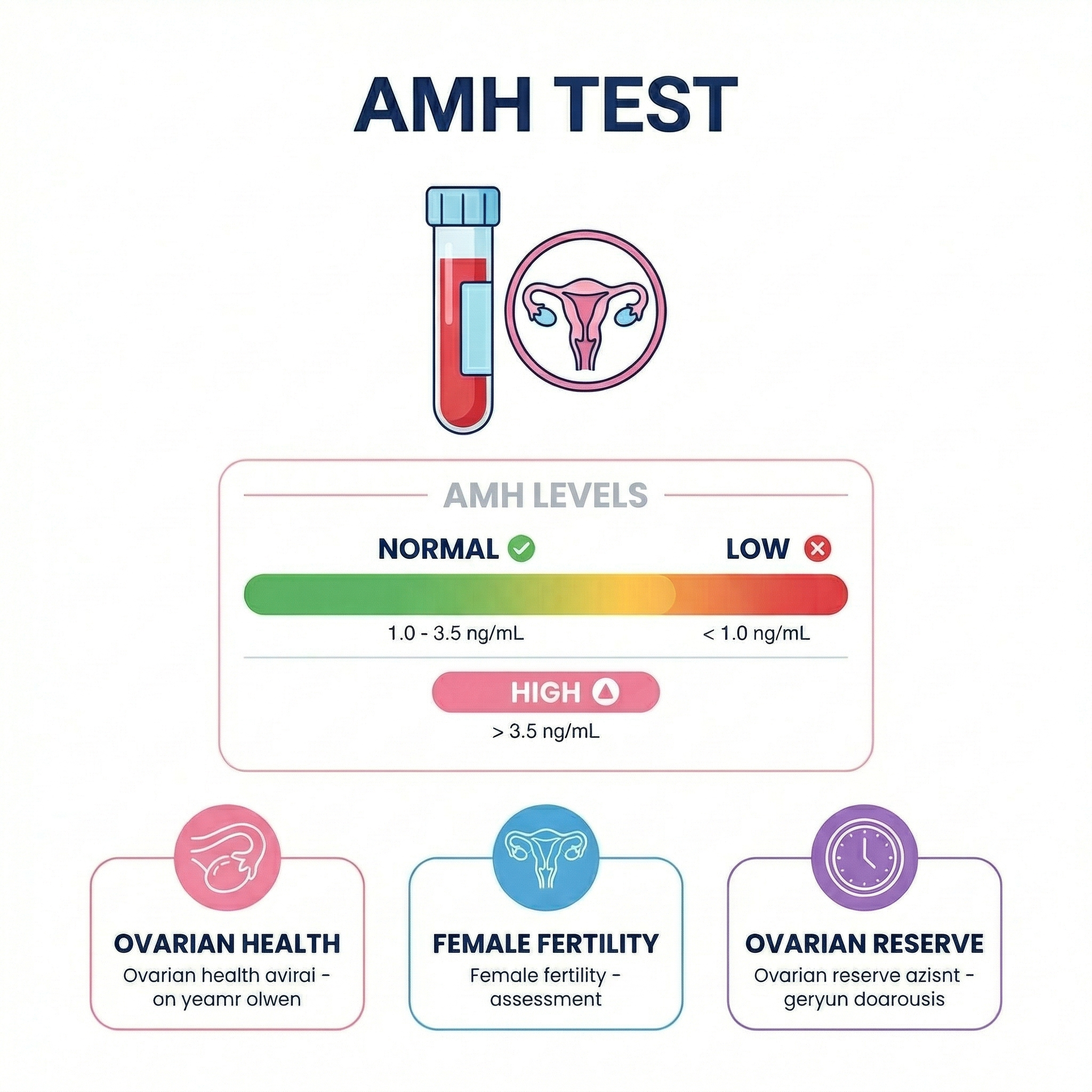
Above 1.0 ng/mL = Normal
When is the AMH test done?
On any day of the menstrual cycle.
AMH test cost?
400 – 600 EGP approx.
Egg reserve at age 40?
Approximately 8,000 eggs only.
Table of Contents
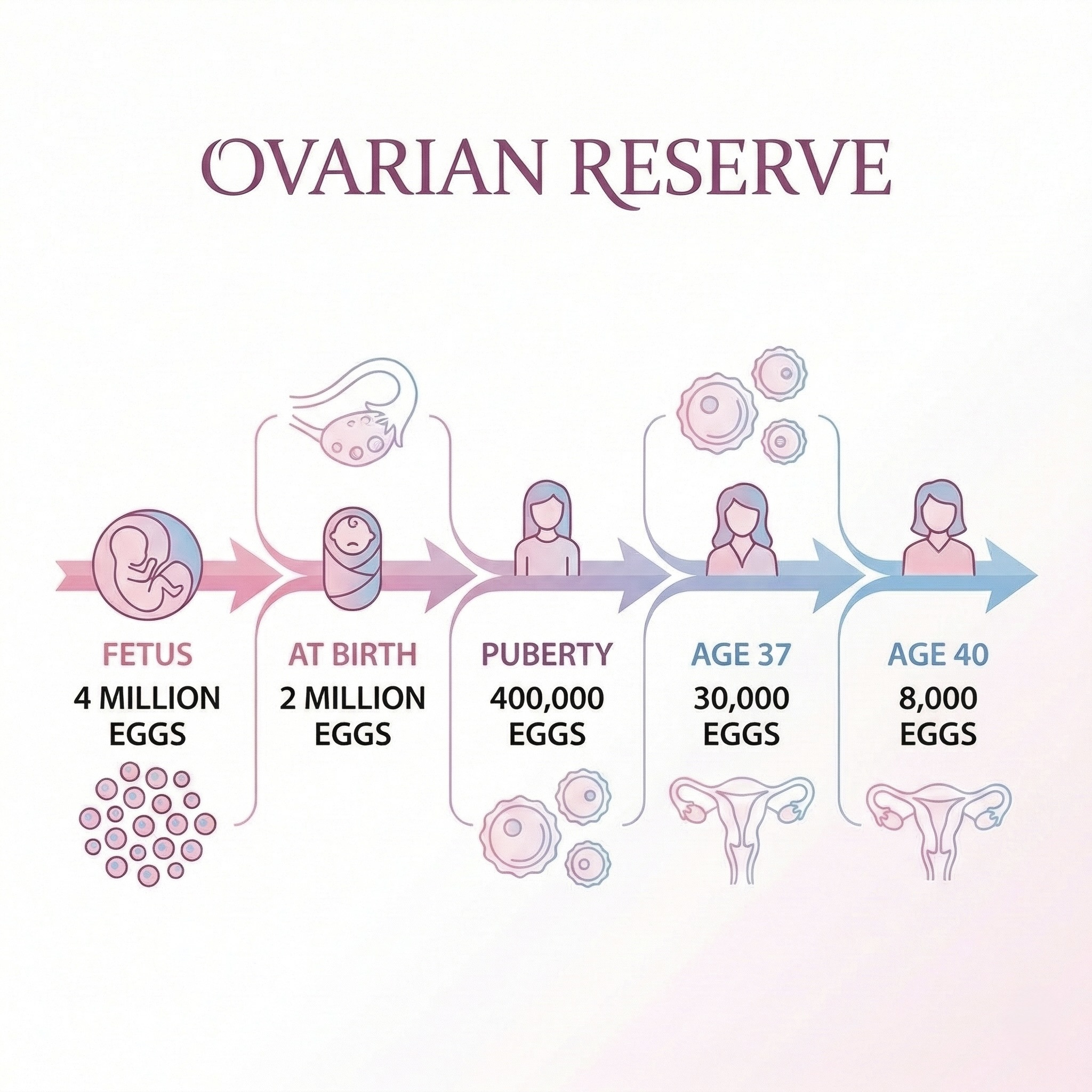
Egg reserve declines with age
What Is Ovarian Reserve?
A woman's ovarian reserve begins forming while she is a fetus at 5 months of age, at which point she has approximately 4 million eggs. At birth, the average drops to around 2 million eggs, and by puberty the average is approximately 400,000 — continuing to decline steadily with time due to the body's ongoing changes.
Important Fact
Each month, 20–30 eggs are released, but only one fully matures and can be fertilized.
The reserve continues to decline:
- Age 37: average 30,000 eggs
- Age 40: average 8,000 eggs
Can ovarian reserve be measured accurately?
Yes — through the AMH ovarian reserve test, which is a highly accurate test that helps determine your egg reserve.
AMH Test for Ovarian Reserve
The AMH test is a blood test that measures the level of Anti-Müllerian Hormone (AMH) — a protein hormone produced by cells inside the ovarian follicles that helps determine the ovarian reserve or egg count.
When Should the AMH Test Be Done?
- When experiencing difficulty conceiving – Learn about delayed conception causes
- Family history of premature menopause
- Thyroid dysfunction
- To help diagnose menstrual cycle disorders
- To monitor certain types of ovarian cancer
- Diagnosing polycystic ovary syndrome (PCOS) and premature menopause
AMH Test Timing
Unlike other hormones, AMH levels do not vary significantly throughout the menstrual cycle, meaning it can be measured on any day of the cycle.
Causes of Low Egg Reserve
The primary factor is advancing age, but several medical conditions can also deplete the reserve:
- Immune system disorders: attacking the eggs
- Turner syndrome: a genetic disorder
- Pelvic inflammatory disease
- Endometriosis – Read more about symptoms and treatment
- Ovarian cancer
- Ovarian injury: accidental surgical damage
- Chemotherapy and radiation therapy
- Smoking, obesity, and hormonal imbalance
Natural Ways to Preserve Egg Reserve
Tips to Preserve Your Ovarian Reserve
- Avoid smoking – it negatively affects egg quality
- Reduce stress and anxiety as much as possible
- Eat a healthy diet rich in vitamins and minerals
- Maintain a healthy weight
- Drink at least 10 glasses of water daily
- Take vitamins as needed under medical supervision
Can Ovarian Reserve Be Increased?
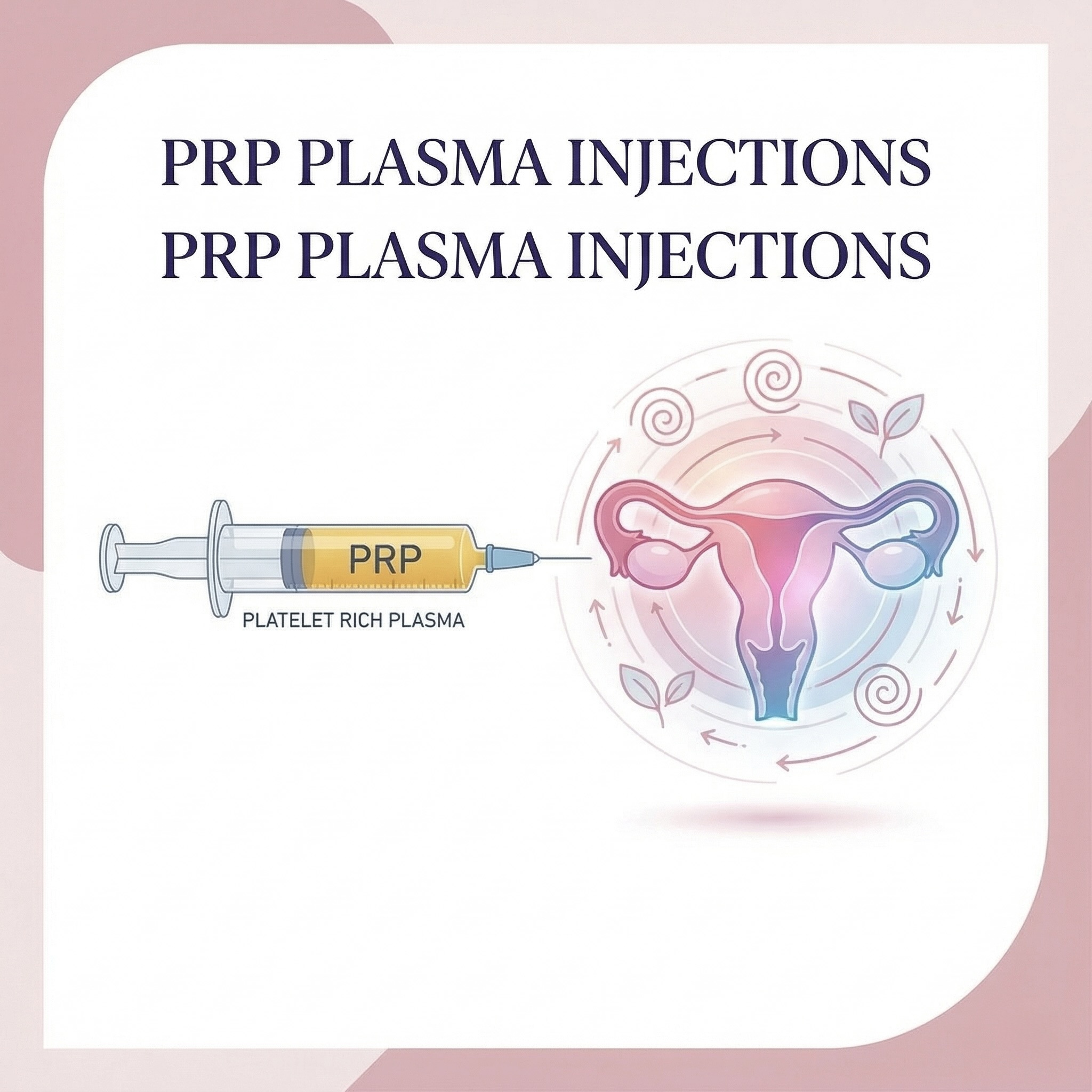
Previously, it was considered impossible to increase ovarian reserve. However, recent successful scientific research has focused on boosting egg reserve through PRP (Platelet-Rich Plasma) injections, yielding very promising results.
Now Available at the Women's Clinic
Through the Women's Clinic and Professor Dr. Mohamed Abd El-Fattah El-Senity, this procedure can be performed with very encouraging results, by God's grace.
Do fertility stimulation medications affect egg reserve?
There is no direct link between stimulation medications and a reduction in egg count.
PRP Injections to Increase Ovarian Reserve
What is PRP?
Plasma is a natural component of blood that contains hormones, vitamins, and minerals. It is a natural, body-derived substance extracted from the blood and reintroduced into the body.
How Do PRP Injections Increase Egg Reserve?
The process works by attempting to create healing and regenerative cells in the ovary — the platelet-rich plasma reaches the ovary and stimulates the repair and activation of ovarian cells.
PRP Ovarian Injection Pricing
PRP injection costs vary depending on the doctor's experience and the type of test tubes used. For current pricing, please contact the clinic directly.
Suffering from Low Egg Reserve?
Book your consultation now with Dr. Mohamed El-Senity to assess your case and explore PRP treatment options
Book Your Appointment NowVitamins to Boost Egg Reserve
Vitamins play an important role in increasing both the quantity and quality of eggs:
- Folic Acid: helps the body form new, healthy cells (400–800 mcg/day)
- Vitamin D: helps increase egg count and reduces miscarriage risk
- Omega-3 Fatty Acids: found primarily in fish
- Coenzyme CoQ10: essential for women over 35 to improve conception chances
- DHEA: improves both the quality and quantity of eggs
Normal AMH Hormone Levels
| AMH Blood Level | Category |
|---|---|
| Above 3.0 ng/mL | High (often indicates PCOS) |
| Above 1.0 ng/mL | Normal |
| 0.7 – 0.9 ng/mL | Below Normal |
| 0.3 – 0.6 ng/mL | Low |
| Below 0.3 ng/mL | Very Low |
Egg Reserve at Age 40
The normal range for ovarian reserve at age 40 is 0.7 – 21.2 ng/mL.
- Monthly conception chance at age 30: approximately 20%
- Monthly conception chance at age 40: approximately 5% only
Important Tip
To increase egg reserve at age 40, options include platelet-rich plasma (PRP) injections into the ovary, along with Vitamin D and DHEA supplementation.
Required Tests for Ovarian Reserve
- FSH Test: performed on Day 2 or 3 of the cycle; helps regulate the menstrual cycle and stimulates ovarian egg production
- Estradiol Test: indicates how well the ovaries are functioning; low levels may indicate menopause onset
- AMH Test: reflects the potential egg count and can be an early indicator of declining ovarian function
- Ovarian Ultrasound: to determine the antral follicle count
- Hysterosalpingography (HSG): to check for any blockage in the fallopian tubes
AMH and IVF Pregnancy Chances
The more eggs produced and retrieved through IVF stimulation, the higher the likelihood of growing and transferring a reasonable number of good-quality embryos.
AMH's Impact on IVF Success
- Low AMH levels lead to reduced IVF success rates
- Particularly in women in their late thirties
- AMH is one of the best markers for predicting ovarian response to stimulation
Important Note on Age and AMH
Age is not always the determining factor in low AMH. Some women have high AMH levels at 40, while others have low levels in their 20s or 30s. This can be due to environmental factors such as cancer treatment or genetic causes.
AMH Test Cost
The cost of the AMH test varies by location and averages between 400 to 600 EGP approximately.
Does low egg reserve prevent natural pregnancy?
It affects a woman's fertility but does not completely prevent conception. Low reserve means reduced chances and may manifest as a longer time to conceive. Conception chances begin declining noticeably in the early thirties, then drop more rapidly after age 37.
Patient Experiences
"My egg reserve was only 0.4 and I was very worried. After PRP sessions with Dr. Mohamed it rose to 1.2, and I got pregnant two months later, praise be to God."
– Um Mohamed, 35 years old
"The doctor explained everything in detail and reassured me that there is hope. The treatment was simple and comfortable and the results were excellent."
– Sara, 38 years old
Frequently Asked Questions
Book Your Appointment Now with Dr. Mohamed El-Senity
Specialized consultation in infertility treatment and PRP injections to increase egg reserve